
Choosing the Right Equine-Assisted Practitioner: A Step-By-Step Guide
Updated: Oct 20
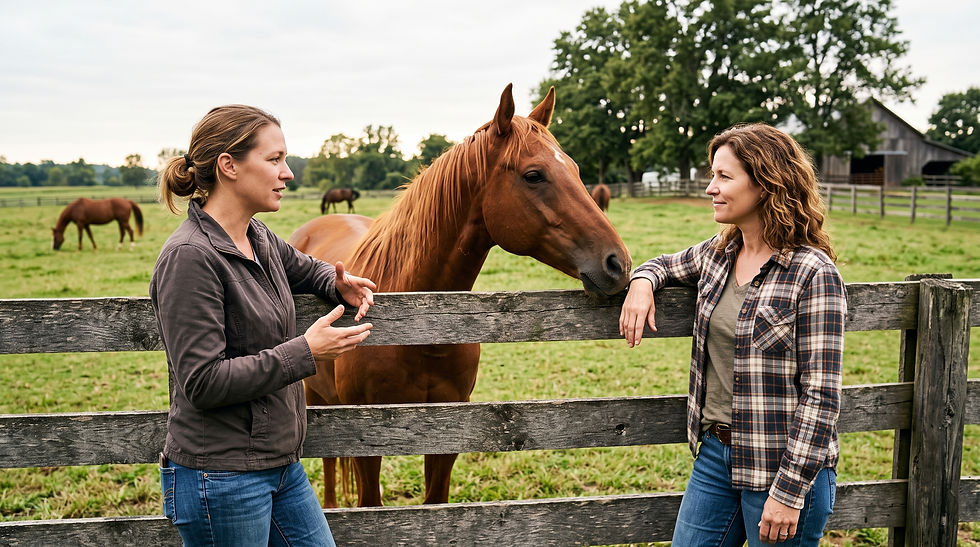
There is a unique kind of quiet that settles over you when you walk into a barn or stand at the edge of a pasture. For many, the simple presence of a horse offers an immediate sense of grounding. But when you are seeking more than just a moment of peace—whether you are a parent exploring equine assisted psychotherapy for teens, a professional referring a client in crisis, or an individual seeking personal growth—that peaceful setting needs to be backed by professional competence.
The world of equine-assisted services is vast, beautiful, and deeply impactful. However, it can also be confusing to navigate. Titles vary, regulations differ by state, and the distinction between therapy and coaching isn’t always obvious. Something can be therapeutic without being therapy, and that difference matters.
There is no single “right” approach to this work, but there is a right way to run a practice. A trustworthy practitioner will welcome your questions plainly, transparently, and without any pressure. Before you, or a client you are referring, step into the arena, here is your definitive guide to evaluating an equine-assisted practitioner.
As you read, keep one thing in mind: you are the one doing the interviewing. Every question below is written so you can ask it, word for word, of any person or program offering equine-assisted services, whether on a first phone call, by email, or standing at the barn.
1. Training, Credentials, and the Scope of Practice
The very first conversation you have with an equine-assisted practitioner should establish exactly what kind of service they are offering. Two programs can share the same barn, the same horses, even the same activities, and still be operating under completely different professional frameworks.
Questions to ask the practitioner:
What training have you completed specifically in equine-assisted work, and how were your skills evaluated before you began working with clients?
Do you hold a professional license? If so, what field is your license in (for example, counseling, marriage and family therapy, social work, or psychology)? In what state or states are you licensed?
Is the equine work you offer a type of therapy, or is it learning, coaching, or support?
If you are not licensed yourself, do you work alongside a licensed professional during sessions? If so, what is each person’s role?
Why it matters: In the U.S., only a licensed health professional (such as a licensed counselor, social worker, or psychologist) can legally provide therapy. Services led by someone without a clinical license fall under the umbrella of learning or horse assisted coaching. While coaching is incredibly valuable, it is distinct from clinical therapy and is rarely billable to health insurance. Knowing what you are signing up for ensures your expectations align with their expertise.
A note on licensure and insurance: The types of professional licenses vary from state to state. You will want to make sure that the professional you are considering working with is licensed in the state you live in. Just because a professional is licensed does not ensure that your insurance company will cover this type of service, even when it is provided by a licensed professional. Before you begin, call your insurance company and ask directly whether they cover equine-assisted services, and ask the practitioner whether they bill insurance or are private pay only.
2. Determining the Right Fit
No single equine-assisted practitioner or program can be everything to everyone. A hallmark of a highly skilled professional is their ability to recognize, and name, their own limitations.
Questions to ask the practitioner:
Who is this equine service designed to serve, and who would it not be suitable for?
How does your program decide whether someone is a good fit for your equine services? Does that happen before services begin, and what does it involve (an intake form, a phone conversation, a visit to the barn)?
How does your program handle the situation if, or when, someone needs more help than you can offer? Who do you refer to?
What to listen for: Listen for boundaries. A professional running a trauma-informed equine practice will know exactly when a client’s needs exceed their scope of care. They should readily name the limits of their practice and have a strong network of other professionals to refer out to when necessary. A practitioner who tells you their program is right for everyone is telling you something important.
3. Physical and Emotional Safety
Working with thousand-pound animals inherently carries risk. A serene environment shouldn't mask the need for rigorous safety protocols.
Questions to ask the practitioner:
How do you prepare for the physical and emotional risks that come with working alongside horses?
What happens if a participant becomes upset or emotionally overwhelmed during an equine session? And what happens if a horse becomes frightened or agitated?
Is everyone leading the session trained in first aid and CPR? Do you carry liability insurance that specifically covers equine-assisted activities?
During a session, who is responsible for watching the horses while attention is on the participant?
What to listen for: You are listening for concrete, specific steps, not just broad reassurance. "Oh, our horses are gentle" is not a safety plan. A good practitioner will explain their de-escalation strategies and emergency procedures clearly.
4. The Welfare of the Horses
In equine-assisted work, the horse is not a tool; they are a partner. How a practitioner treats their animals is a direct reflection of how they will treat their human clients.
Questions to ask the practitioner:
How do you choose which horses take part in your equine-assisted sessions?
How can you tell when one of your horses doesn’t want to participate in a session, and what do you do then?
How many sessions do your horses work in a day or a week, and how do they rest and recover?
What to listen for: A practitioner who advocates for the horse as fiercely as they advocate for the client. They should be able to articulate how they read equine body language for signs of stress or burnout, and they should have a clear policy for letting a horse "opt out" of a session.
Listen, too, for whether the horse is described as a partner or as a prop. When a horse is an authentic participant, the session grows out of what actually happens between horse and human. When a horse is used as a prop, the session follows a script and the horse is simply expected to fit inside it.
5. Accountability and Ethics
Because the equine-assisted industry has various certifying bodies rather than one centralized governing board, personal accountability is paramount.
Questions to ask the practitioner:
Do you follow a written code of ethics for your equine-assisted work, and may I see a copy?
If I have a concern or complaint about my sessions, what is the process, and who handles it? If you hold a license, which state licensing board oversees your practice?
Who do you consult with, or receive supervision from, about your equine-assisted work?
How do you protect my privacy, or my child’s? Who has access to session notes, and are photos or videos ever taken during sessions?
What to listen for: A clear, documented process. The practitioner should ideally engage in peer consultation or clinical supervision, proving that there is someone beyond themselves holding them accountable to best practices.
6. Tracking Results and Progress
Whether you are working toward better emotional regulation, leadership skills, or trauma recovery, there should be a roadmap.
Questions to ask the practitioner:
What goals will we work toward in these equine sessions, and who sets them?
How will we know whether this equine work is actually helping? How often will we review progress together?
How do you gather feedback from participants and, when appropriate, from families or referring professionals?
What to listen for: A simple, jargon-free explanation of what they do, why they do it, and how they track progress. While formal, academic research isn't required for every practice, a structured plan for evaluating success is non-negotiable.
The Bottom Line: If You Only Ask Three Things
If you are short on time or feeling overwhelmed, narrow your focus to these three critical questions:
Is the equine work you offer therapy, or is it learning, coaching, or support? Do you hold a professional license, and if so, in what field and in which state(s)?
Who is your equine service not suitable for, and where do you refer people who need more than you can offer?
How do you protect the physical and emotional safety of both the people and the horses in your sessions?
A practitioner who welcomes these questions—who answers them with confidence and clarity—is usually one worth working with. They understand that your curiosity isn't a challenge to their authority; it’s the foundation of a trusting partnership.
Thinking about a career in this field instead?
If you would like to add equine assisted team building sessions to your existing lesson program or feel called to facilitate these life-changing experiences yourself with a licensed clinician, or if you are a practitioner seeking to strengthen or redirect your career, understanding the landscape is your first step. Discover your options and start your journey on our CAREER PATHS PAGE. Then SUBSCRIBE to receive helpful resources and information to guide you as you embark on your journey. When you subscribe, you will also receive EXCLUSIVE VIDEOS from Industry founders and experts, Linda Pucci, Barbara Rector, Greg Kersten, Lynn Petr and Dr. Rebecca Bailey! These video interviews are priceless! And they’re our gift to you!
ABOUT EQUINE ASSISTED CAREERS
The bond between humans and horses has the power to heal, teach, and transform. Pam Salem created Equine Assisted Careers based on her 28 years in the industry, to bridge the gap between passion and profession. Whether you are a licensed clinician looking to enhance your practice, or an equestrian seeking to facilitate life-changing learning and coaching experiences, we provide the roadmaps, expert insights, and community you need to build a sustainable, ethical practice. Discover your path and SUBSCRIBE to receive valuable resources at www.equineassistedcareers.com.
Frequently Asked Questions (FAQ)
What is the difference between equine assisted psychotherapy and equine assisted coaching?
Equine Assisted Psychotherapy (EAP) is facilitated by a licensed mental health or medical professional to treat specific clinical diagnoses. Equine assisted coaching focuses on personal development, learning, and goal-setting, and is typically not meant to treat mental health disorders.
Is equine assisted learning good for teens?
Yes, equine assisted learning for teens can be highly effective. The non-clinical environment of a barn often helps teenagers who may be resistant to traditional talk therapy feel more comfortable, building trust, communication and life skills through interactions with the horses like these Equine Assisted Careers Specialty Paths.


Comments